State of Florida Contract Supplier #360-240-06-1 Ask Me About Our Green Seal Certified Products
NJPA Vendor GSA Contract Provider
Sustainable Floor Care Solutions
Commercial Textile and Carpet Care
Tile and Grout Restoration
Floor Covering Solutions
Complete Floor Care
Indoor Environmental Quality
Request a Demo
Public Sector Programs
What's New

Sustainable Floor Care Solutions

Increase Employee Productivity by up to 10% with a Healthy Work Environment

Click here to find out how MilliCare helps create a healthier work environment.

Read our latest issue of "Solutions for Sustainable Floor Care" and get more information about MilliCare.


Cubix Now Has LEED AP on Staff

Marca Barr, SaniGLAZE Sales Representative, recently completed the coursework and examination required to achieve the US Green Building Council's LEED® AP accreditation. This is a first for Cubix and we're very pleased with Marca's accomplishment! Read more


Cubix Recognized for Outstanding Customer Service

Cubix has earned the MilliCare Textile & Carpet Care Operations Excellence Award for the fourth consecutive year. Read more


Read the latest edition of Cubix INK

Don't miss the latest Cubix INK Newsletter - your resource for sustainable floor care news. Get it now or sign up.

Take a look at our News page for more...

Why Sustainable Floor Care?

No doubt you're hearing a lot of talk these days about implementing a "green cleaning" program. But you may be asking yourself... What are the real benefits of a green cleaning initiative? Specifically, your building's cleaning practices have a significant impact on indoor air quality, energy and water usage, appearance, occupant and visitor impression... and most importantly (especially in the current economic climate) operating cost.

There is a wealth of information available on the subject and it can be overwhelming. At Cubix, Inc., we want to partner with you as your single source for sustainable floor care solutions. We build relationships with our clients by serving as a resource to answer your questions on sustainable floor care and offer the most effective and environmentally-friendly solutions available. If you are working toward a green building certification, we can provide information on how our products and services contribute.

Green Resources ...click the article title to view
Increase Employee Productivity by up to 10% with a Healthy Work Environment

Unhealthy Work Environments Drain Your Pocketbook

Health Effects of AllergensThe American College of Allergists reports that 50% of all illnesses are caused by polluted indoor air. According to the College, reducing the presence of particulate contaminants can prevent many common ailments like runny noses, sneezing, itchy eyes, sore throats, headaches and other symptoms triggered by allergens.

It’s easy to see how an unhealthy work environment directly affects a company’s bottom line. In fact, the U.S. Environmental Protection Agency (EPA) has estimated that the U.S. economy loses up to $60 billion per year in lost productivity and increased sick leave time as a result of indoor air quality related illnesses.

That’s a staggering cost for the U.S. economy overall, but how are individual companies affected? Let’s look at an example: A typical company allocates 85% of their per-square-foot office costs toward employee expenses. Let's say that Company ABC’s employees cost $400,000 a year and occupy 2,000 square feet of space. That means that Company ABC spends about $200 per-square-foot per person.

Healthy work environments have been shown to raise employee productivity by approximately 10% through a reduction in sick days and improved employee attitudes. How would this affect Company ABC? A 10% productivity increase would result in a $20 per-square-foot per person increase in rental value.

Making Improvements that Make an Impact

What’s the best way to improve the health of your company’s work environment? Start by gathering a team, taking a stroll around your office space and identifying low-hanging fruit. There are two main areas where you should focus: (1) the building and its systems and (2) the interior furnishings of the building.

Making ImprovementsWhen evaluating your building, you’ll need to determine the efficiency and cleanliness of your HVAC system, as well as look for any building materials that may be off-gassing VOC’s or other contaminants. You may need to hire outside contractors to participate in your audit and make recommendations.

When looking at the interior furnishings, you’ll want to get the most bang for your buck by focusing on the materials that your employees come in contact with most frequently. Some materials may be known for off-gassing formaldehyde, VOC’s and other harmful chemicals. These items will need to be replaced with more environmentally-friendly materials as your budget allows. Other materials may just need a routine cleaning to remove particulate contaminants like dust mites, pollen, bacteria, and mold spores. Don’t forget items like office chairs and other furniture, carpet, workstation panels, etc.

You should also create corporate policies that encourage healthier purchasing decisions that support your commitment to employee health. Don’t forget to work with your office supply distributor to find healthier alternatives to conventional products. These can include everything from non-chlorine-bleached paper (organochlorines are highly hazardous) to non-toxic markers and correction fluid.

Once you’ve made several improvements, it’s a great idea to share the results of your audit and action items with your employees. This will show how much you value your employees and are committed to having a positive impact on their health and well-being.

Click here to learn more about MilliCare Commercial Carpet & Textile Cleaning
Click here to schedule your free demonstration of the MilliCare process

SaniGLAZE Helps Control MRSA and Other Infectious Organisms in Healthcare Facilities

MRSAMRSA (Methicillin-resistant Staphylococcus aureus) and other resistant infectious organisms continue to be a concern for healthcare facilities. According to the Center for Disease Control (CDC), in 1974, MRSA infections accounted for two percent of the total number of staph infections; in 1995 it was 22%; in 2004 it was 63%.

Impact on Your Bottom Line - Medicare No Longer Covers "Preventable" Infections

Although a commitment to patient health is the main priority, MRSA and related infections are now affecting the bottom-line of every healthcare provider. Medical News Today reported that, starting in 2009, Medicare, the US government's health insurance program for elderly and disabled Americans, will not cover the costs of "preventable" conditions, mistakes and infections resulting from a hospital stay. Instead, the bill will be picked up by the hospital itself since the rules don't allow the hospital to charge the patient.

Frequent Cleaning and Disinfection of Rooms Recommended by CDC

Frequent Cleaning & Disinfection of Rooms Recommended by CDCWith the healthcare industry already facing layoffs due to the nation's economic downturn, it is important to find and implement solutions to stop the spread of infectious organisms and keep costs down. According to CDC data, the main mode of transmission for MRSA or other multi-drug resistant organisms is by contact with an infected patient or surfaces contaminated with their body fluids. In order to control the spread of these organisms, the CDC recommends frequent cleaning and disinfection of rooms inhabited by patients who are known or suspected to be infected.

University of Minnesota Shows that General Surface Cleaning Increases Effectiveness of Disinfectants

A study by the University of Minnesota found that general surface cleaning is a key step that must precede disinfecting. General surface cleaning physically removes all visible dirt, organic matter, and bacteria. If organic matter is not first removed, it can inactivate disinfectants. However, proper surface cleaning will remove many microorganisms and increase the effectiveness of the disinfectant. The study also stated that a general surface clean must ALWAYS precede disinfection, even if the surface is visibly clean.

SaniGLAZE Shields Tile and Grout from Contaminants and Makes Surface Cleaning Easy

SaniGlaze Creates an Impervious ShieldBefore attempting to disinfect an area containing ceramic tile, facility managers should be aware of the contaminants that have become embedded in the porous tile and grout surface over time: dirt, urine, mold, and bacteria. If the surface has been in contact with the bodily fluids of a patient infected with MRSA or other infectious organisms, there is no sure way to clean and disinfect this surface.

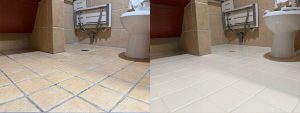
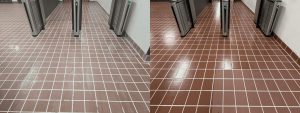
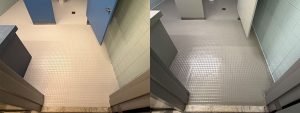
The SaniGLAZE Restoration Bonding Process transforms the tile surface, making it non-porous and much easier to maintain. Independent laboratory tests confirm that mold, mildew and other organisms cannot breed in a SaniGLAZE restored floor because its grout sealing bonding technology creates a non-porous, protective surface that prohibits moisture and contaminant absorption. Soil and contaminants can still be deposited on the surface, but are easily removed using environmentally-friendly chemicals.

SaniGLAZE Tile & Grout Restoration is a Key Part of Any Truly Health-Focused Cleaning Program

A recent edition of Cleaning & Maintenance Management cautioned that we can no longer judge a facility's level of cleanliness by simply evaluating aesthetic appearance. Instead, a true health-focused cleaning program focuses on cleaning at the unseen microbial level through the use of disinfectants. SaniGLAZE transforms porous tile and grout from a reservoir of infectious organisms, into an impervious surface that can be easily cleaned and properly disinfected. This is a key component in efforts to control the spread of MRSA and other resistant infectious organisms in healthcare settings.

Click here to learn more about SaniGLAZE Tile & Grout Restoration
Click here to schedule your free demonstration of the SaniGLAZE process

SaniGLAZE Helps Control Mold & Mildew in Public Facilities

Health Effects of Mold & MildewPublic facilities like schools and government buildings are increasingly concerned about exposure to mold, mildew and other types of bacteria. Studies have found an association between mold and mildew and a variety of adverse health effects. Common molds can trigger allergic reactions, including asthma, as well as sinus infections, headaches, coughing, and eye and throat irritation. Others can produce airborne toxins, called mycotoxins, which can cause even more serious problems, including chronic fatigue, loss of balance and memory, irritability, and difficulty speaking.

This problem is especially concerning in schools, daycare, churches and other facilities where children are present. These youngsters are more susceptible to mold-related illness than adults because their lungs and other organs are still developing, says Ruth Etzel, M.D., former chairwoman of the Committee on Environmental Health of the American Academy of Pediatrics. Claudia Miller, M.D., an environmental health expert at the University of Texas Health Science Center at San Antonio, says no amount of visible mold is appropriate at school.

Impact on Your Bottom Line - Remediation Costs Millions

A Government Accounting Office report stated that approximately 10% of all public educational facilities discover mold problems that require remediation efforts. According to the U.S. Environmental Protection Agency (EPA), mold and mildew problems occur more frequently in humid climates like Florida and have led to various school closings across the country.

Remediation and renovation projects typically cost $2 to 5 million dollars or more. In many cases, the cost to fix the problem is more than that of constructing an entirely new facility. Mold in schools makes a splash in the press, so there's more available data than for government facilities. But it's a safe bet that the problem we see in the educational system is common throughout the public sector. According to the U.S. EPA, addressing mold and mildew problems proactively is the most successful and cost-effective way to manage them.

SaniGLAZE Shields Tile and Grout from Contaminants and Reduces Your Risk of Mold & MIldew Growth

SaniGlaze Creates an Impervious ShieldMost public facilities contain areas with ceramic tile flooring and facility managers should be aware of the contaminants that have become embedded in the porous tile and grout surface over time: dirt, urine, mold, and bacteria. It is nearly impossible to thoroughly clean these surfaces and remove dingy grime and odors, along with unhealthy organisms. Replacement is a costly and inconvenient option.

The SaniGLAZE Restoration Bonding Process transforms the tile surface, making it non-porous and much easier to maintain. Independent laboratory tests confirm that mold, mildew and other organisms cannot breed in a SaniGLAZE restored floor because its grout sealing bonding technology creates a non-porous, protective surface that prohibits moisture and contaminant absorption. Soil and contaminants can still be deposited on the surface, but are easily removed using environmentally-friendly chemicals. And better yet - you eliminate the cost and inconvenience of a flooring replacement project.

SaniGLAZE Tile & Grout Restoration is a Key Part of Any Truly Health-Focused Cleaning Program

A recent edition of Cleaning & Maintenance Management cautioned that we can no longer judge a facility's level of cleanliness by simply evaluating aesthetic appearance. Instead, a true health-focused cleaning program focuses on cleaning at the unseen microbial level. SaniGLAZE transforms porous tile and grout from a reservoir of mold, mildew and other infectious organisms, into an impervious surface that can be easily cleaned and properly disinfected. This is a key component in efforts to control the growth of mold and mildew in educational, government and other public settings.

Click here to learn more about SaniGLAZE Tile & Grout Restoration
Click here to schedule your free demonstration of the SaniGLAZE process

MilliCare Earns Green Seal™ Certification

“Any government complex, school or commercial building who wants to go green (without spending a lot of money) needs to take a closer look at the MilliCare process and their Green Seal™ Certified products." - Rick DeVane, PresidentMilliCare Dry Carpet Cleaner, the premier water-free commercial carpet cleaning process, and MilliCare Pre-Mist Concentrate (Version 4), a spot and stain remover, both achieved the Green Seal™ environmental standard for industrial and institutional cleaners. This certification is a recognition of the products' reduced human and aquatic toxicity and decreased smog production potential.

Founded in 1989, Green Seal™ provides science-based third-party environmental certification standards that are credible, transparent, and essential in an increasingly educated and competitive marketplace. The standard is recognized by all sustainability initiatives, such as the U.S. Green Building Council’s LEED Rating System. In regard to LEED, the Green Seal™ Certification now qualifies the MilliCare products for specific credits (EQ Points 3.4 – 3.6) under the LEED for Existing Buildings: Operations & Maintenance program.

Ask Me About Our Green Seal Certified ProductsCubix, Inc. is Central Florida’s exclusive authorized MilliCare franchisee and has been providing the dry chemical carpet and textile cleaning process to local customers since 1997.

“The MilliCare process has always offered a number of green benefits, such as mold and mildew prevention, and now the Green Seal™ Certification adds even more environmentally friendly reasons to switch from the old hot water extraction carpet cleaning process,” Cubix President, Rick DeVane, explained.

“Any government complex, school or commercial building who wants to go green (without spending a lot of money) needs to take a closer look at the MilliCare process and their Green Seal™ Certified products,” Rick continued.

How to Handle Claims of "Sick Building" Syndrome

PROBLEM: Occupants of my facility claim that they are victims of “Sick Building Syndrome,” i.e. experiencing health problems that could be caused by the building environment. I need facts and data to either disprove these claims or identify the cause.

SOLUTION: Schedule a facility IEQ Audit from a knowledgeable company who can provide the evidence and support that you need.

Indoor Air Quality AuditAt Cubix IEQ, the on-site audit and sampling are FREE. You are only responsible for the lab testing fees.

Here’s how our IEQ Audit works:

(1) We perform an on-site audit with a physical inspection and baseline testing.
(2) We submit samples for testing to profile existing contaminants – all tests are performed by an independent, third-party, certified laboratory.
(3) We submit a full report containing details on all test results and our recommendations for remediation, based on accepted industry standards.

Typically, any indoor environmental issues can be easily resolved through a simple HVAC duct inspection, cleaning and sealing. Cubix IEQ has the equipment and training to complete these tasks according to the National Air Duct Cleaners Association (NADCA) ACR 2007 standard.

However, at Cubix IEQ, there is no pressure on you to schedule remediation services following an IEQ Audit. We always encourage you to confirm all results with an outside consultant and work with a remediation contractor of your choice. We also provide you with the full results of all laboratory testing.

Cubix IEQ is a division of Cubix, Inc. Learn more at www.cubixieq.com.

Dealing with Flood Damage Caused by Equipment Failure or Natural Disaster

PROBLEM: My facility was damaged by flooding due to equipment failure or a natural disaster.

SOLUTION: Even if it's only a minor incident, it's important to dehydrate the building quickly and properly to prevent damage to interior structures and halt the growth of mold and mildew. 

Water RestorationWhen Cubix IEQ arrives at the site of the excess moisture, we immediately set up a quarantined damage zone that contains all affected areas. We also test the entire area surrounding the damage zone for additional moisture - this includes all four sides, above and below, as well as the humidity in the air. Due to our damage zone separation process, we are able to maintain proper humidity and indoor air quality throughout the rest of the home or office building during the entire dehydration process.

The dehydration process consists of the following steps: (1) Psychrometric readings taken daily throughout the drying cycle, (2) water extraction of all affected areas and (3) equipment, including dehumidifiers, air-scrubbers, and air movers, placed in accordance to the Institute of Inspection Cleaning and Restoration Certification (IICRC) - 500 standards.

Cubix IEQ is an adjustor-friendly company and we coordinate as necessary with all major and minor insurance carriers. Our equipment is capable of removing moisture from drywall, plaster, interior paint, cement floors, carpets, insulation, and basements. We also have specialized machinery for handling sensitive areas such as hardwood floors, cabinets, clean rooms and floating floors, as well as ejector systems for walls.

To learn more about Cubix IEQ, visit our new website at www.cubixieq.com or call (863) 644-2958. Cubix IEQ is a division of Cubix, Inc.

What Can You Save Today?
Use what you already have to make the biggest impact on the environment

EarthIn 1968, NASA released the first photos of the entire Earth from space taken by the Apollo 8 moon mission. That familiar shot of a tiny blue-green marble floating among the stars has become an iconic and familiar image of our history. “When people look at Earth from the outside,” NASA scientist John Oró predicted, “something strange and revolutionary will happen: people will alter their thinking.” And he was right.

As a result of our collective change in perspective, the following decades saw the passage of every major American environmental law and the movement continues to this day. In the United States, 2007 witnessed the largest grassroots environmental demonstration in years, Step It Up 2007, with rallies in over 1,400 communities and all 50 states for real global warming solutions. Today almost every company is taking some action to be a better environmental steward, but no one corporation has all the answers. The most successful companies are using a variety of strategies to impact their ecological footprint, ranging from simple common-sense measures to highly technical innovative solutions. Here are a few examples:

Coors produces 3 million gallons of ethanol a year by distilling waste beer. The brewery sells 200-proof ethanol to Valero Energy to be distributed at gas stations in Colorado. The program has been so successful that Coors doubled its capacity by building a $2.3 million facility in 2005.

JPMorgan Chase is starting renovations at the top - on the roof, 53 stories up in its Manhattan headquarters building, where the bank is building what is essentially a giant pan to collect rainwater. The water will be funneled into a 55,000-gallon tank in the basement, filtered, and then piped up for toilet flushing. Coupled with new low-flush urinals and toilets, this system will cut the building's water use - and cost - by 30%.

The hot zone in any office is the server room, where the ceiling-high racks of computers generate constant heat. Water is typically used chill the rooms by absorbing heat. At Intel's newest data center, in Haifa, Israel, that hot water is being recycled to warm the building in winter and to heat the showers in the basement gym.

These companies, and many others like them, are following the U.S. EPA’s three Rs: reduce, reuse and recycle. Use what you already have to make the biggest impact on the environment. An EPA statistic states that, “during the past 35 years, the amount of waste each person creates has almost doubled from 2.7 to 4.4 pounds per day. The most effective way to stop this trend is by preventing waste in the first place.” The benefits are clear: saving natural resources, decreasing the volume of materials deposited in landfills and economic savings in materials, packaging, etc.

Maintaining the Value of Your Building
...Both the physical structure and the people inside

Indoor Air QualityOne of the many responsibilities of facility and property managers is to protect the worth of the owner’s investment – i.e. maintain the property value of the building. Such an initiative includes everything from preventing structural damage to promoting the reputation of the facility as a healthy place to work. A broad scope of factors affect property value and one key aspect is the presence of mold or mildew. 

We all know the serious effects that mold growth can have on a building and its occupants. The rotting of biodegradable building materials, an unpleasant odor and potential health symptoms such as allergic reactions, asthma and other respiratory complaints are just some of the symptoms of a “sick building.” Poor indoor environmental quality can also put a building at a disadvantage in the real estate market.

According to an issue brief from the International Facility Management Association, “when excessive moisture or water accumulates indoors, mold growth will often occur, particularly if the moisture problem remains undiscovered or unaddressed. There is no practical way to eliminate all mold and mold spores in the indoor environment. The way to control indoor mold growth is to control moisture.” This can be a particularly tough challenge for building managers in humid climates like Florida.

Responsible facility managers already conduct periodic walk-throughs of their building to look for problems such as mold growth, water management issues and HVAC irregularities. FM’s also listen closely to any occupant complaints of health-related symptoms that may indicate the presence of mold. Although walk-throughs and attention to employee health are labeled by some as preventative measures, they are really just a tool for catching existing mold or other related indoor environmental quality issues quickly.

What if you went a step beyond and took a proactive approach by implementing systems that reduce the possibility of mold growth? These practices help ensure that mold removal isn’t just a short-term fix. They also help you maintain the value of the building that you manage, as well as ensuring a healthy working environment.

Here are some ideas from Cubix, Inc. for reducing the risk of mold and mildew growth in your building. Call us toll free at (877) FL-CUBIX (352-8249) to learn more.

IEQ Screenings

Many facility managers contract with third-party indoor environmental quality experts to conduct periodic screenings. These screenings can include a visual inspection, as well as the collection of air and dust samples for lab testing.

Cubix, Inc. is now offering these services through their new division, Cubix IEQ – Indoor Environmental Quality Resource. Cubix IEQ offers a free IEQ Audit – all you pay are the lab fees – that includes an on-site audit, sample collection, coordination of testing with an independent, third-party lab and a full report detailing your test results and our recommendations for remediating any problems based on accepted industry standards. Click here to find out more about Cubix IEQ.

Restorative Bonding for Ceramic Tile & Grout

Traditional ceramic tile surfaces use a porous, cementitious grout that holds moisture and allows mold and mildew to develop and breed. SaniGlaze restorative bonding technology utilizes an advanced polymer resin-based material that creates a non-porous protective surface. This surface prohibits moisture and contaminant absorption. Independent lab tests have confirmed that a SaniGlaze restored floor has a reduced risk of mold and mildew growth. Click here to find out more about SaniGlaze.

Preventative Entry-Way System

Carpet and rug systems act like a filter – trapping and holding dirt, dust, allergens and mold spores. These contaminants may be tracked in by employees and visitors or may travel into the building through the ventilation system. Due to their vertical-pile construction, it is in the nature of carpet and rugs to hold pollutants until they’re removed by a cleaning process.

The good news is that the contaminants aren’t released back into the air. The bad news is that your carpet and rugs are holding on to dirt, mold spores, etc. which cause damage to the carpet fibers when foot traffic grinds them deeper into the structure. By installing an effective entry-way mat system, like Milliken’s First Appearances system, you can reduce the amount of contaminants that are tracked onto your carpet. This prevent carpet damage, while also reducing the pollutants, like mold spores, that are present throughout the building. Click here to find out more about our entry-way mat systems.

Dry Polymer Carpet Cleaning Process

The use of hot water extraction systems to clean carpet raise humidity levels in a building environment and require aggressive drying for up to 24 hours after the cleaning is complete. The excess moisture increases the risk of mold and mildew growth.

MilliCare cleans using a proprietary dry polymer that absorbs and removes dirt from deep inside your carpet. The MilliCare uses 95% less water than a typical hot water extraction process. The small amount of moisture applied for cleaning is significantly reduced during the final vacuuming phase. With so little residual moisture, the risk of mold and mildew growth is significantly lower than with a hot water extraction system. Click here to find out more about MilliCare Carpet and Textile Care.

"Green" Your Existing Building
Retrofitted buildings can earn back their investment in 2 to 2 and a half years

Green CertificationIf your company wants to contribute to the "green" movement by improving indoor air quality and reducing energy and water usage… look no further than your building. Consider the impact that commercial buildings have on the environment. According to the U.S. Green Building Council (USGBC), buildings account for 39% of the country’s carbon dioxide emissions, as well as 70% of all landfill waste and use 71% of the nation’s electricity.

The USGBC has a solution to help owners and managers of existing buildings to meet their environmental goals without costly renovations that will interrupt the normal day-to-day operations of their facility. The LEED for Existing Buildings, or LEED-EB, standard provides clear-cut, attainable goals that buildings can achieve in the areas of recycling, energy and water usage, green cleaning and more.

LEED EB certified buildings typically have lower operating costs, improved efficiency and provide healthier, cleaner work places that attract employees and tenants. A 2006 USGBC study found that by retrofitting buildings, owners can save 90 cents a square foot annually, on average, in energy and other costs and earn back their investment in 2 to 2 and a half years.

Sustainable Cleaning Practices
Do you need a resource to help you implement a “green” cleaning program?

Green CleaningMost of us understand what sustainability is and those of us involved in building management can easily apply that understanding to cleaning. You already know that your building's cleaning practices have a significant impact on indoor air quality, energy and water usage, appearance, occupant and visitor impression... and operating cost. 

But what’s the easiest and most effective way to implement a sustainable cleaning program? To get into the nitty-gritty, you need to know about cleaning products, equipment, practices and performance... and more.

The U.S. Green Building Council has emphasized the importance of sustainable cleaning practices in their recently revised LEED for Existing Buildings standard and provided the following guidelines for “green” cleaning:

    • All floor, carpet and upholstery care products must be certified as non-toxic and low-emitting.
    • Carpet cleaning equipment must hold the Carpet and Rug Institute’s Seal of Approval.
    • All cleaning equipment must comply with decibel limits, have good ergonomic design and utilize safeguards to protect building surfaces.
    • The building must have a cleaning program which addresses staffing needs, training and proper handling of chemicals.
    • Cleaning practices must be audited for effectiveness.
    • You also need to think about your entryways – Are visitors and employees tracking in dirt, dust and other particles?

Busy Facility Managers may think that implementing a “green” cleaning program is a too much of a headache, but the benefits more than make up for the effort. We’re talking about a healthier, cleaner working environment that makes a positive impression on occupants and visitors alike. If LEED certification is a goal for your company, it’s an added plus that sustainable cleaning methods contribute significantly toward LEED compliance.

By partnering with a maintenance contractor who understands “green” cleaning, much of the headache disappears. Call us at (407) 373-7410 for more information on our sustainable floor and textile care services.